

In the industrial automation sector, the stability of industrial control boards directly determines the operating efficiency of the entire equipment. Choosing a reliable, turnkey PCBA assembly factory is crucial to ensuring board quality. Faced with numerous vendors offering PCBA assembly services, companies need to consider multiple factors, including technical expertise, quality control systems, and service scope, to find a suitable partner.
First, examine the factory's core SMT manufacturing capabilities. Industrial control boards require extremely high chip placement accuracy. The soldering tolerance for 0.3mm-pitch chips must be controlled within ±0.05mm. This requires the factory to be equipped with high-precision chip placement machines and AOI (automated optical inspection) equipment. High-quality factories' SMT production lines can achieve a placement speed of 30,000 points per hour, and use SPI (solder paste inspection) systems to monitor solder paste printing quality in real time, effectively reducing problems such as cold solder joints and solder bridging. Additionally, check whether the company has the soldering capabilities for complex components like BGAs and CSPs, as well as the high-temperature soldering technology required for lead-free processes. These are fundamental requirements for industrial-grade PCBA assembly.
Secondly, focus on the full-process control capabilities for turnkey PCBA assembly. Under the turnkey model, the factory's supply chain management capabilities are particularly crucial. Reliable factories will establish component certification systems, partnering with original equipment manufacturers or authorized distributors like TI and ADI to ensure the authenticity of key materials like chips and capacitors, and implement material traceability through their ERP systems. In the production process, flexible manufacturing capabilities should be available, enabling both bulk orders and small-batch, high-variety customization. For example, for thick-film resistors and high-voltage capacitors commonly used in industrial control boards, rapid material matching and process adjustments can be achieved. Furthermore, whether DFM (Design for Manufacturability) feedback is provided to help customers optimize PCB layouts and improve production yield is also a key indicator of service quality.
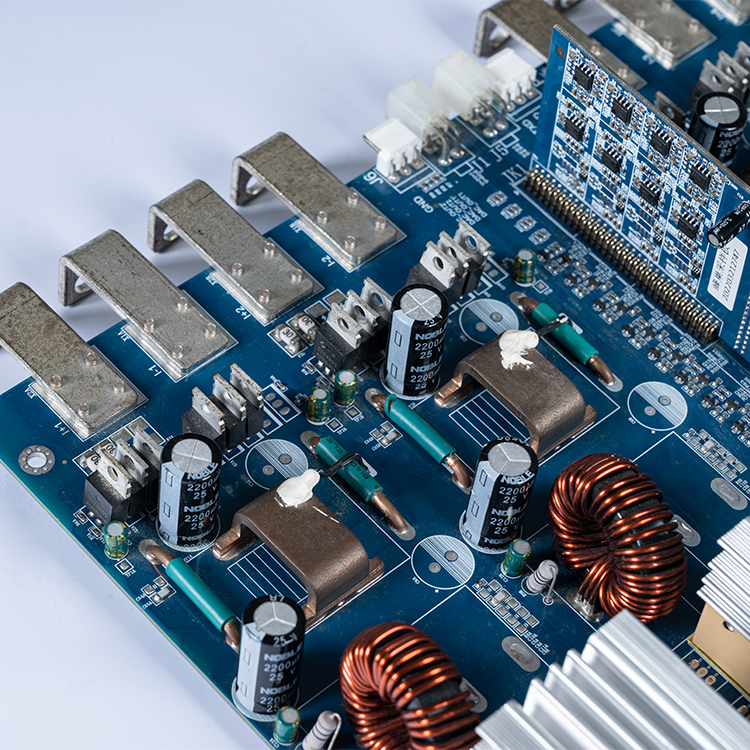
Finally, the quality inspection system is the lifeline of industrial control boards. In addition to conventional ICT (in-circuit testing) and FCT (functional testing), specialized factories also employ X-ray inspection equipment for non-destructive testing of the internal quality of BGA solder joints. To address the interference requirements of industrial environments, reliability tests such as high-temperature cycling and vibration and shock testing can be performed to ensure stable operation of the PCBA in environments ranging from -40°C to 85°C. Also, check whether the factory is ISO9001, IATF16949, and whether it has established a comprehensive failure analysis mechanism. When defective products are encountered, fishbone diagrams and 5-Why analysis methods can be used to trace the root cause, rather than simply rework.
Finally, service response speed is also crucial. The delivery cycle of industrial control boards is often directly linked to the cost of production line downtime. Reliable factories promise to complete sample trials within 48 hours, with a delivery cycle of 7-15 days for bulk orders. They also provide dedicated project engineers to monitor order progress throughout the entire process. We provide 24-hour technical support during after-sales service, assisting customers in troubleshooting control board issues during system commissioning and even providing PCBA optimization recommendations based on equipment operating data.
Choosing a turnkey PCBA assembly factory for industrial control boards is essentially about finding a partner with both technical expertise and a strong sense of responsibility. By focusing on SMT manufacturing precision, turnkey service capabilities, in-depth quality control, and responsiveness, companies can identify a truly suitable factory, laying a solid foundation for the stable operation of their industrial equipment.