

In the wave of the new energy vehicle industry's profound transformation towards "high range, high safety, and high intelligence," the automotive electronic control system, as the "nerve center" of the entire vehicle, directly determines driving safety and user experience through its operational stability. Energy storage PCBAs (Printed Circuit Board Assemblies), as the core of this system's energy management, bear the critical responsibilities of power distribution, voltage regulation, and safety protection; their performance level has become a core element for automakers to build product competitiveness. Dongguan Jinglin Communication Technology Co., Ltd. (hereinafter referred to as "Jinglin Communication"), with 16 years of experience in the automotive-grade electronics field, recently officially launched a high-efficiency energy storage PCBA solution specifically tailored for automotive electronic control systems. With its full-scenario adaptability and stringent quality standards, it provides reliable support to global automotive industry chain partners.
The "2025 Global Automotive Electronics Industry Development Report" shows that the global automotive electronic control system market size exceeded US$360 billion in 2024, with new energy vehicles contributing 75% of the growth. Compared to traditional gasoline vehicles, the electronic control systems of new energy vehicles integrate multiple modules such as battery management system (BMS), motor control unit (MCU), and vehicle control unit (VCU), placing revolutionary demands on the power density, temperature adaptability, and anti-interference capabilities of energy storage PCBAs. "Traditional industrial-grade PCBA solutions often expose three major pain points in the complex automotive environment: the risk of power failure due to capacitor bulging at high temperatures, signal disturbances caused by electromagnetic interference, and range loss due to low energy conversion efficiency," emphasized Mr. Li, Director of the Automotive Electronics Division of Jinglin Communication, at the technology launch conference. These issues have become key bottlenecks restricting the performance upgrade of new energy vehicles.
Jinglin Communication's newly launched energy storage PCBA solution comprehensively covers the core electronic control scenarios of pure electric, hybrid, and hydrogen fuel cell vehicles. It can precisely adapt to key components such as BMS, VCU, and MCU. Its core advantages are concentrated in three dimensions: "material upgrades, architectural innovation, and intelligent protection," fully complying with the ISO 26262 functional safety standard and AEC-Q104 automotive-grade certification requirements, ensuring product reliability from the source.
In terms of material selection, Jinglin Communication has completely abandoned traditional FR-4 board materials, adopting automotive-grade High Tg halogen-free copper-clad laminates. These laminates boast a glass transition temperature of 178℃, maintaining structural stability even in extreme environments ranging from -40℃ to 125℃, expanding the temperature range by 65% compared to conventional solutions. Key components are sourced from leading international brands such as Infineon and Texas Instruments, using automotive-grade products. The power chips utilize third-generation semiconductor silicon carbide (SiC) material, reducing switching losses by 78% and increasing energy conversion efficiency to 98.9%. For automotive vibration scenarios, the PCB employs an "immersion gold + thick copper" process, with copper foil thickness reaching 3oz, increasing solder joint tensile strength by 52%. This allows it to withstand 10 years/200,000 kilometers of vibration fatigue testing across a vehicle, fully meeting the long-term usage requirements under complex road conditions.
Architectural innovation is the core of improving system stability. Leveraging 16 years of experience in electronic circuit design, Jinglin Communications' R&D team adopted a "distributed energy storage + centralized management" architecture, modularly separating the energy storage unit from the control unit. This avoids interference from power component heat generation on the control chip and provides independent redundant protection in case of faults. In wiring design, the layout was optimized using 3D electromagnetic field simulation technology, controlling electromagnetic interference (EMI) below 15dB, far exceeding the industry average standard of 40dB. This effectively solves common problems in new energy vehicles such as "motor interference causing range data jumps" and "intelligent driving signal delays." For intelligent driving scenarios, the solution integrates an independent safety monitoring chip, enabling millisecond-level sampling of parameters such as current, voltage, and temperature. In the event of an anomaly, a multi-level protection mechanism is immediately triggered, with a response speed four times faster than traditional solutions.
The intelligent protection system further enhances safety. Jinglin Communications' independently developed multi-dimensional protection algorithm can monitor eight abnormal states in real time, including overcurrent, overvoltage, overtemperature, short circuit, and surge. Combined with hardware-level protection circuits, it forms a dual protection system of "algorithm + hardware," with an anomaly response time of only 0.018 milliseconds. Meanwhile, the solution incorporates adaptive energy distribution technology, which dynamically adjusts energy storage strategies based on vehicle driving conditions (acceleration, cruising, braking, hill climbing): it instantly releases peak power during rapid acceleration to ensure power output, automatically switches to energy-saving mode to reduce energy consumption during cruising, and improves energy capture efficiency during regenerative braking, increasing the vehicle's range by 12%-18%. This algorithm has passed 150,000 simulated driving tests, perfectly adapting to complex scenarios such as urban congestion, highway driving, and mountain road conditions.
With its robust product capabilities, Jinglin Communication's energy storage PCBA solution has been successfully supplied to numerous leading domestic and international automakers and component suppliers. Previously, a domestic new energy vehicle brand experienced a 35% reduction in vehicle range during testing in high-altitude and cold regions due to the insufficient low-temperature performance of traditional PCBAs, along with issues such as delayed start-up and limited air conditioning heating. Following its collaboration with Jinglin Communication, new models upgraded with their energy storage PCBA solution saw range degradation controlled to within 18% in extreme environments down to -35℃, a start-up response time improved to 0.6 seconds, and air conditioning heating efficiency increased by 22%. Within three months of its launch in the northern market, this model achieved sales exceeding 100,000 units. The brand's purchasing director stated, "Jinglin Communication's solution not only solved our pain points in low-temperature performance, but its comprehensive testing data and compliance documentation also saved us significant time in European and North American certifications. This is the core reason we chose to maintain a long-term partnership."
To match the R&D pace of global automakers, Jinglin Communication has established a full-process customized service system. It can provide 6- to 14-layer PCB design solutions for different vehicle models' power requirements, supporting flexible customization within a current range of 50A-600A. Equipped with a 30-person automotive-grade R&D team, including 12 with over 10 years of experience in automotive electronics R&D, it provides a one-stop service from "requirements analysis to solution design, sample testing, and mass production," shortening the sample delivery cycle to 6 working days, 60% faster than the industry average.
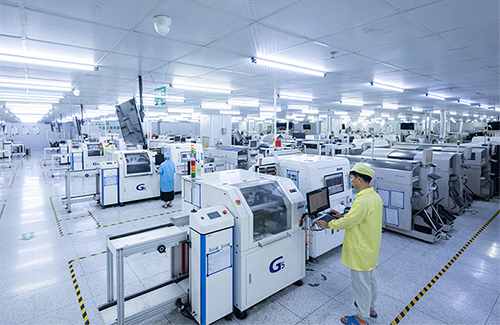
In terms of quality control and after-sales support, Jinglin Communication boasts four fully automated SMT production lines equipped with AOI optical inspection, X-ray inspection, and ICT online testing equipment, achieving a soldering yield of 99.99%. It has established three overseas technical service centers in Munich, Germany; Detroit, USA; and Tokyo, Japan, staffed with professional FAE engineers, providing 24/7 technical response and ensuring on-site support within 48 hours. All products come with a 5-year/150,000 km warranty, completely eliminating customer concerns.
Facing the trend of automotive electronics moving towards "full-range electric drive + intelligent control," Jinglin Communication has initiated the development of a next-generation energy storage PCBA solution. This solution plans to integrate AI predictive maintenance functions and a 5G data transmission module, providing early warnings of potential failures by monitoring the aging status of components in real time and synchronizing operational data to the automaker's cloud management platform, supporting remote maintenance. Currently, eight invention patents have been applied for related technologies, with mass production expected in the fourth quarter of 2026.
If your company is seeking a highly reliable and energy-efficient energy storage PCBA solution for automotive electronic control systems, please contact Kingsley Communication through the following methods: Send an email to kingsleyliu@wisdommobi.com to obtain a detailed technical white paper and request samples; communicate in real-time with our automotive electronics foreign trade specialist via WhatsApp (+86-13537260078); or visit our official website https://www.jlpcba.com/ to view complete product test reports, case studies, and factory production environment. Dongguan Kingsley Communication Technology Co., Ltd. looks forward to working with global automotive industry partners to build a safe energy barrier for new energy vehicles and create new value for the industry.