

In the field of medical equipment, the reliability of PCB (printed circuit board) is directly related to the life safety of patients, so IPC Class 3 standard must be strictly followed - this highest standard for high-reliability electronic equipment, and puts forward "zero defect" requirements for the electrical performance, mechanical strength, and anti-environmental interference capabilities of PCBs. Dongguan Jingqian Communication Technology Co., Ltd. has been deeply involved in the fields of PCBA assembly (printed circuit board assembly), turnkey pcba assembly (one-stop PCBA assembly) and SMT manufacturing (surface mounting technology manufacturing) for many years. Through full-process process control and technological innovation, it has solved the difficulties in PCB assembly (PCB assembly) of medical equipment, and helped customers to stably meet the IPC Class 3 standard.
The core of realizing the IPC Class 3 standard begins with the strict screening of raw materials. Medical equipment PCBs need to withstand complex scenarios such as disinfection and temperature fluctuations. Beijing Communications prefers to use high Tg (glass transition temperature ≥170℃) substrates that meet the flame retardant grade of UL94 V-0 to ensure that the PCB does not deform under a high-temperature disinfection environment; copper foil uses high-ductile electrolytic copper (elongation ≥15%) to avoid line breakage due to vibration and impact; lead-free high-temperature solder (melting point ≥217℃) to meet the solder joint stability requirements in the long-term use of medical equipment. Each batch of raw materials must provide material proof and third-party inspection report to eliminate defect risks from the source.
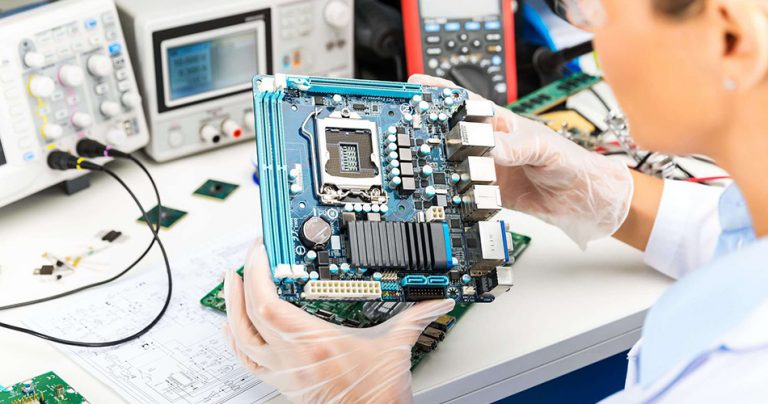
SMT manufacturing process accuracy is a key link in achieving standards. Medical equipment PCBs are often equipped with micro medical sensors and high-precision chips (such as 0201 packaged components), which require extremely high installation accuracy. Jingqian Communication has introduced an imported high-speed chip machine (positioning accuracy ±0.01mm), which can automatically identify component offset and reverse problems such as components in combination with the AI vision detection system; the solder paste printing process uses laser steel mesh (opening accuracy ±0.005mm), and the solder paste thickness (controlled at 50-150μm) and shape is monitored in real time through 3D SPI (solder paste detection) equipment to avoid defects such as false welding and bridge connection. In response to the requirements of "no holes in the solder joint" in the IPC Class 3 standard, Jingqiu Communication optimizes the reflow soldering curve, and through segmented heating (preheating zone 80-150℃, welding zone 230-250℃), the void rate of the solder joint is controlled below 0.1%, which is far lower than the upper limit of 5% allowed by the standard.
The full-process testing system is the final guarantee of "zero defects". Jingqiu Communication sets a triple inspection level for the assembly of medical equipment PCBs: in the first inspection stage, X-Ray detection equipment is used to penetrate the inner layer of the PCB to check the conductivity of blind buried holes and the defects of the inner layer line; in mass production, the component mounting and solder joint quality is checked piece by piece through AOI (automatic optical detection), with a leakage detection rate of ≤0.001%; in the finished product testing stage, the actual working conditions of medical equipment (such as high and low temperature cycles, humidity tests), and 24-hour power-on stability test and insulation resistance detection (required ≥100MΩ) are simulated to ensure that the PCB can still work stably in extreme environments. In addition, for turnkey pcba assembly customers, Jingqiu Communication also provides component traceability services to establish a full life cycle archive from procurement to assembly, meeting the traceability requirements of the IPC Class 3 standard.
"The 'zero defect' of medical equipment PCB is not the goal, but the bottom line." The person in charge of Dongguan Jingqiu Communication Technology Co., Ltd. said that the company has passed the ISO 13485 medical device quality management system certification and integrated the IPC Class 3 standard into the entire PCBA assembly process. From design optimization, raw material control to SMT manufacturing and finished product testing, there are clear standards and records in each step. In the future, Jingqiu Communications will also upgrade testing equipment (such as introducing ICT online testing system), further improving the reliability of medical device PCBs and providing global medical device manufacturers with safer and more stable turnkey pcba assembly solutions.