

The Critical Role of QA in Energy Storage PCBA
As global demand for renewable energy surges, energy storage systems (ESS) have become the backbone of sustainable power grids. At the heart of every reliable ESS lies a high-performance Printed Circuit Board Assembly (PCBA), where even minor defects can lead to catastrophic failures—from reduced battery life to safety hazards like overheating or short circuits. This makes rigorous testing and quality assurance (QA) not just a manufacturing step, but a non-negotiable pillar of energy storage PCBA production.
Key Testing Stages for Energy Storage PCBA
Incoming Component Inspection (ICI)
Quality starts before production begins. We subject all raw components—from capacitors and resistors to power management chips—to X-ray inspection and LCR bridge testing. For energy storage-specific parts like lithium-ion battery management system (BMS) components, we verify voltage tolerance and temperature resistance to ensure they meet IEC 62133 standards, eliminating faulty parts that could compromise the entire assembly.
In-Process Testing (IPT)
During SMT assembly, real-time quality checks prevent cumulative errors. Automated Optical Inspection (AOI) scans for soldering defects such as cold joints or tombstoning, while SPI (Solder Paste Inspection) ensures precise paste deposition—critical for the high-current circuits in energy storage PCBs. Our technicians also conduct periodic manual audits to validate automated results, especially for complex BGA (Ball Grid Array) components.
Functional and Reliability Testing
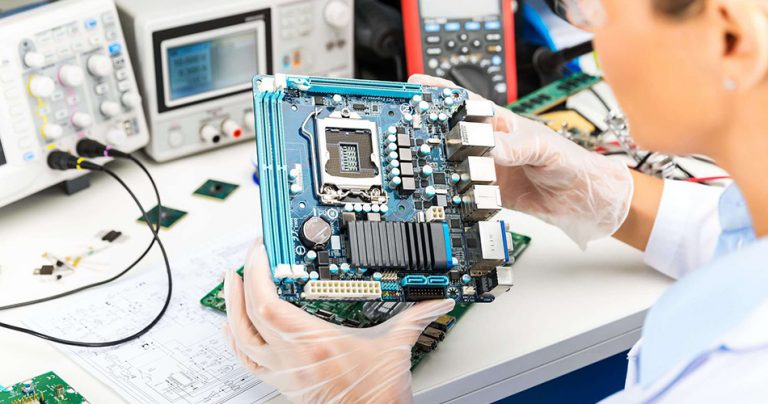
Post-assembly, each PCBA undergoes rigorous functional testing under simulated operating conditions. We use specialized equipment to mimic variable load demands, measuring charge-discharge efficiency and signal stability. Reliability tests include temperature cycling (-40°C to 85°C) and humidity exposure to replicate harsh field environments, ensuring PCBs perform consistently in solar farms, residential storage units, and industrial ESS.
Safety and Compliance Testing
Energy storage PCBs must adhere to strict safety regulations. We perform hipot (high-potential) testing to verify insulation integrity, preventing electrical leakage. Additionally, we conduct short-circuit protection and overvoltage testing to ensure the PCBA can safely shut down in abnormal conditions, complying with UL 94 and IEC 61010 standards for global market access.
Our QA Framework: Technology Meets Expertise
At our facility, QA is an integrated process, not a final checkpoint. We leverage Industry 4.0 tools like IoT-enabled testing stations that log real-time data, allowing us to trace every PCBA’s quality history from component batch to final delivery. Our QA team includes engineers certified in energy storage electronics, who tailor testing protocols to client-specific requirements—whether for a small-scale residential ESS or a utility-grade battery bank.
Case: Enhancing ESS Reliability for a Solar Project
A recent client specializing in solar energy storage approached us with recurring PCBA failures. By upgrading our IPT with 3D AOI and adding thermal shock testing, we identified and resolved a soldering defect in their BMS PCBs. The result? A 98% reduction in field failures, extending the ESS’s operational lifespan by 25% and lowering the client’s maintenance costs significantly.
Why Choose Our Energy Storage PCBA QA Services?
We combine cutting-edge testing technology with deep expertise in energy storage applications. Our end-to-end QA process ensures your PCBs are not just functional, but resilient, compliant, and built to last. Whether you need PCBs for grid-scale storage or portable power systems, we tailor our testing to your unique needs, helping you deliver reliable ESS solutions to the market.